










About half of all adults in Germany wear corrective eyewear, so we’re often asked whether canyoning is possible while wearing glasses. Based on our experience as guides, the answer is clear: With the right preparation, neither glasses nor contact lenses pose an obstacle. Everyday glasses fit easily under a canyoning helmet, a snug sports glasses strap keeps them secure during jumps and swimming sections, and soft daily disposable contact lenses offer a proven alternative. The only important thing is that you can clearly see the route and your guide, because sure-footedness requires good vision. Here, we’ve compiled a list of tried-and-true solutions for people who wear glasses.


Spring mit uns in die Canyoning Welt!
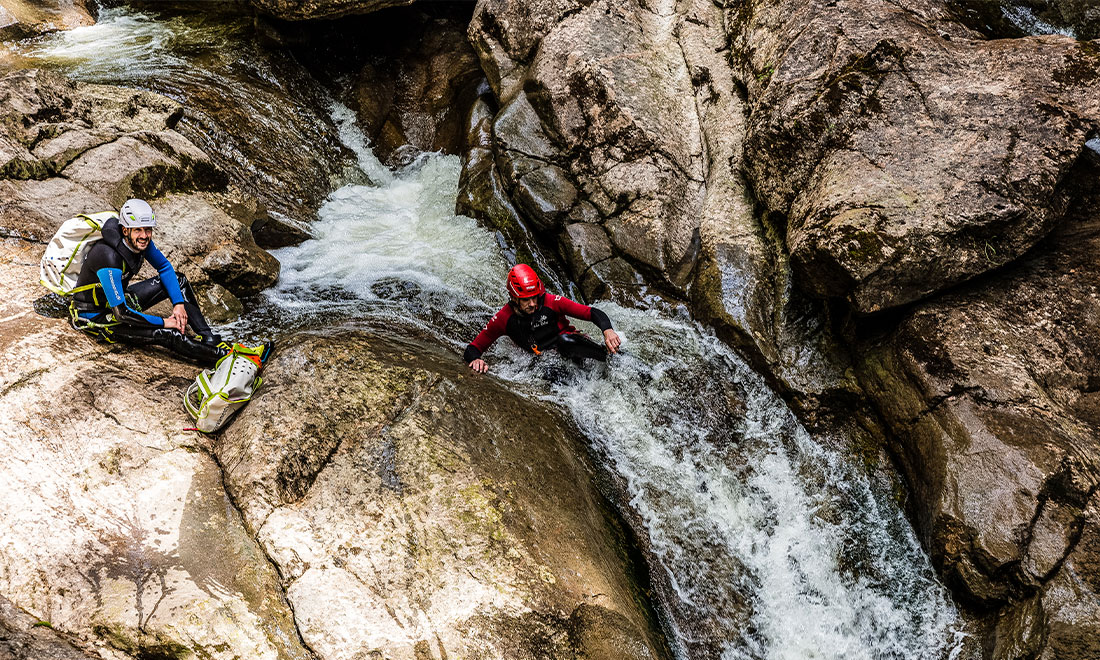


Hiking in the Gorge While Wearing Glasses: Safety and Handling
A simple combination of three measures has proven effective in practice. First, a snug-fitting sports glasses strap from a sporting goods store or an optician will keep your glasses securely on your head even when they come into contact with water, because forces generated by jumping, sliding, and standing under waterfalls will immediately send unsecured glasses into the pool. Second, it’s a good idea to bring an older pair of glasses as a backup for the trip, because losing them won’t be a big deal; lost items are practically impossible to find in a gorge. Third, inform your guide about your glasses before setting out so that they can keep an extra eye on you at jump spots and show you how to briefly secure your glasses with your hand if necessary. Our helmets—which are part of the included Edelrid gear for every guided tour—have enough room for standard eyeglass frames without causing pressure or restricting your vision. Our page on beginner canyoning at the Basic Level describes how the entire equipment distribution and briefing process works before a tour.
Contact Lenses and Life Without Visual Aids
Many experienced canyoners prefer soft daily disposable contact lenses because they’re affordable, take up no space under a helmet, and losing them isn’t a big deal. There’s a simple rule to follow: When jumping into the water or passing under waterfalls, close your eyes briefly—experience shows that this keeps the lenses securely in place. You should still pack a spare pair in a waterproof case; talk to your guide, who can often carry small items in a waterproof container. If you have low vision, you might wonder whether you can manage without any vision aids at all, but we advise caution here, as canyoning requires surefootedness on wet rock, and you need to be able to clearly see passages, hand signals, and your guide at all times. If in doubt, opt for secure glasses or contact lenses. After the tour, briefly rinse your glasses or eyes with clean water. If you have further questions about preparation, our overview of booking and tour information from purelements can help.



You are currently viewing a placeholder content from YouTube. To access the actual content, click the button below. Please note that doing so will share data with third-party providers.
More InformationYou are currently viewing a placeholder content from YouTube. To access the actual content, click the button below. Please note that doing so will share data with third-party providers.
More Information