










A canyon offers no emergency exit, which is precisely why professional preparation is crucial to the safety of every canyoning tour. The bulk of our safety efforts focus on prevention: tour planning, assessing weather and water levels before every departure, detailed briefings, dry-land rappelling drills, and a guide-to-guest ratio of no more than eight guests per guide. In the rare event of an emergency, we rely on well-rehearsed procedures carried out by certified guides, first-aid equipment on every tour, and a safety management system compliant with ISO 21101 for Adventure Tourism. On this page, we transparently explain how prevention and emergency management work together at purelements and what you can do to help.


Spring mit uns in die Canyoning Welt!


Prevention: The best emergency is one that is prevented
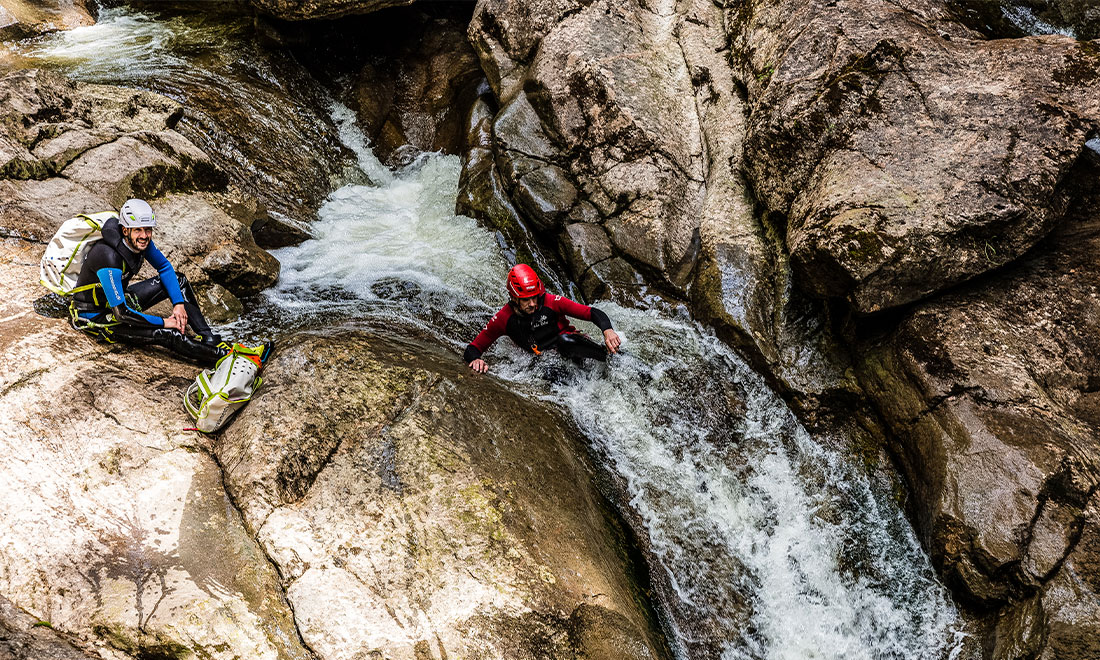
Prevention starts with planning, because our guides assess every tour based on weather forecasts, precipitation data, and current water levels; if this assessment is negative, the tour is canceled, and we communicate this decision openly and without excuses. This approach is backed by over 25 years of experience in the gorges of the Allgäu and the neighboring Alpine regions, because waterways like the Starzlach on the Grünten react to precipitation in their watersheds, and correctly interpreting these reactions is a skill that must be learned. Before entering the water, there is a detailed briefing covering safety rules for water and rock, as well as a dry abseiling practice session to ensure every technique is mastered before it’s needed. During the tour, the guide keeps a close eye on every person thanks to a maximum guide-to-participant ratio of 1:8, selects routes based on the group’s condition on the day, and uses alternative routes when individual guests reach their limits; time pressure is not a risk factor for us. The fundamentals of this approach are documented in detail on our page about our certified safety concept.
An Emergency: Procedures, Training, and Your Role
If an incident occurs despite all preventive measures—such as a sprain or a circulatory problem—defined procedures are put into effect. The guide provides the affected person with the first-aid equipment carried on the trip, simultaneously ensures the group’s safety at a sheltered location, and decides on the next course of action—which can range from continuing the trip under supervision to an early exit or alerting mountain rescue. Our guides are prepared for this through their first-aid training—which covers bandaging, rope techniques, rescue techniques, meteorology, and communication—and is kept up to date through regular continuing education; our founder, Thomas Waibel, has been training canyoning guides worldwide for years. The organizational framework is provided by the ISO 21101 Safety Management System, which documents emergency plans and has them externally reviewed, supplemented by insurance coverage that is included with every one of our tours. Your own contribution remains manageable yet important: providing honest information about your health, fitness, and swimming ability; staying sober on the day of the tour; and following instructions. The booking information for all tours explains the rules for cancellations and rescheduling in advance.


You are currently viewing a placeholder content from YouTube. To access the actual content, click the button below. Please note that doing so will share data with third-party providers.
More InformationYou are currently viewing a placeholder content from YouTube. To access the actual content, click the button below. Please note that doing so will share data with third-party providers.
More Information