








Spectacular images of jumps and waterfalls inevitably raise the question of risk, and this question deserves an honest answer rather than reassurance. As an outdoor sport in alpine terrain, canyoning carries a residual risk that can never be completely eliminated; however, guided canyoning with professional operators is statistically very safe, as the vast majority of serious incidents occur on private tours lacking training, local knowledge, and weather expertise. With over 25 years of experience, association-certified guides, and a safety concept certified to ISO 21101, we explain which factors make a tour safe and how you can recognize reputable providers.


Spring mit uns in die Canyoning Welt!


Risk Factors and How Guided Tours Manage Them
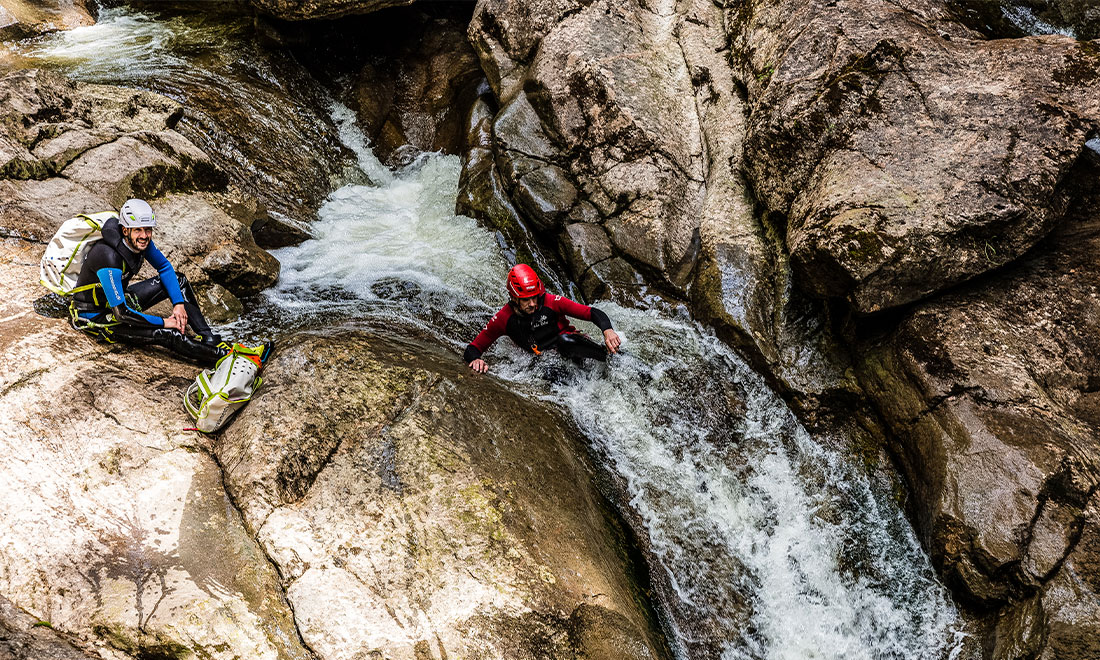
Objectively speaking, the greatest danger in canyoning lies not in jumps or rappelling sections, but in sudden changes in water levels following rainfall in the watershed. This is precisely where professional guidance comes into play, as our guides evaluate weather forecasts, precipitation data, and current water levels before every trip and cancel a tour if the assessment is unfavorable; this decision-making authority stems from association-certified training in meteorology and years of local expertise. The second risk category concerns technical errors, and there is a clear mechanism in place to address this as well: a detailed briefing, dry-land rappelling practice before every tour, and a guide-to-guest ratio of no more than eight guests per guide, ensuring that errors are detected early and corrected before they become a problem. Third, the equipment and its condition are crucial, which is why we use only certified gear from our partner Edelrid in Isny and document its maintenance. First-aid kits on every tour and comprehensive insurance coverage round out the organizational framework. The details of our standards and their external verification are described on the page about our safety concept with ISO certification.
How to Spot Reputable Providers
Reliable criteria will help you make your choice more than marketing claims, and there are five points you can check before every booking. First, ask about the guides’ training, because association-certified guides who undergo regular continuing education form the foundation of every safe tour. Second, check the guide-to-guest ratio, because a guide with too many guests can’t keep an eye on everyone; our company-wide limit is 1:8. Third, look for documented, externally audited standards, such as those required by our ISO 21101 Safety Management System for Adventure Tourism—we were the first and only German-Swiss outdoor company to be certified company-wide under this standard; at our Ticino location, we’ve also held certification from the Safety in Adventures Foundation for years. Fourth, first-aid equipment and insurance are standard; fifth, you can recognize a reputable provider by open communication—for example, when a provider consistently cancels tours under unfavorable conditions. You can do your part by providing honest information about your health and swimming ability. The page on purelements’ unique selling points highlights the values and standards that further set us apart from other tour operators.


You are currently viewing a placeholder content from YouTube. To access the actual content, click the button below. Please note that doing so will share data with third-party providers.
More InformationYou are currently viewing a placeholder content from YouTube. To access the actual content, click the button below. Please note that doing so will share data with third-party providers.
More Information